



Sports injury treatment at Cheema Medical Complex, Mohali
Football, cricket, kabaddi, badminton, basketball, running, gym training and even a weekend game with friends can end with a twisted ankle, a painful knee or a strained muscle. A sports injury that is treated well heals faster and is less likely to come back. One that is ignored can turn into a long-term problem.
At Cheema Medical Complex (CMC Hospital), on Mohali Stadium Road in Phase 4, the orthopaedic department treats sports injuries for school and college athletes, gym-goers, runners and recreational players. X-ray, CT scan, physiotherapy and keyhole surgery are in the same hospital, and the emergency is open 24 hours. We see players from Mohali, Chandigarh, Zirakpur, Kharar and across the Tricity.
Common sports injuries we treat
- Ankle sprains: ligaments on the outer side of the ankle stretched or torn after rolling the foot
- Knee ligament injuries: ACL, MCL and PCL tears from twisting, landing or direct blows
- Meniscus tears: pain, swelling and locking of the knee after a twist
- Shoulder dislocation and rotator cuff injuries in throwing, contact and gym sports
- Muscle strains: hamstring, calf, thigh and groin pulls
- Tendon problems: Achilles tendinitis, patellar tendinitis (jumper’s knee), tennis elbow and golfer’s elbow
- Runner’s knee (pain around the kneecap) and shin splints
- Stress fractures from repeated loading in runners and athletes
- Fractures and dislocations from falls and collisions
First aid for a fresh injury
For most soft-tissue injuries, the first one to two days follow a simple plan:
- Protect the injured part and stop playing.
- Rest it and avoid putting full weight on it if that hurts.
- Ice wrapped in a cloth for 15 to 20 minutes, several times a day.
- Compress with an elastic bandage if it is swelling.
- Elevate the limb above heart level when you can.
Avoid heat, massage and alcohol in the first days, as they can increase swelling.
Come to the emergency if you cannot put weight on the leg, the joint looks deformed, the pain is severe, there is numbness or a cold, pale limb, or you heard a crack. The emergency at Cheema Medical Complex is open 24 hours, with X-ray on site.
Diagnosis
At the orthopaedic OPD (Monday to Saturday, 10:30 am to 5:00 pm), the doctor will ask exactly how the injury happened, examine the joint or muscle, and test stability and strength. X-rays rule out fractures. MRI shows ligaments, menisci, cartilage and tendons when a significant soft-tissue injury is suspected. Ultrasound can help with some muscle and tendon injuries.
Treatment
Physiotherapy and rehab
Most sports injuries heal without surgery, and rehabilitation is the most important part of recovery. Our physiotherapy team, in the same hospital, works through:
- Reducing pain and swelling
- Restoring full movement
- Rebuilding strength, starting gently and progressing
- Balance and control work (proprioception), especially after ankle and knee injuries
- Sport-specific drills: running, cutting, jumping and landing
- A safe return-to-play plan
Supports, taping and bracing
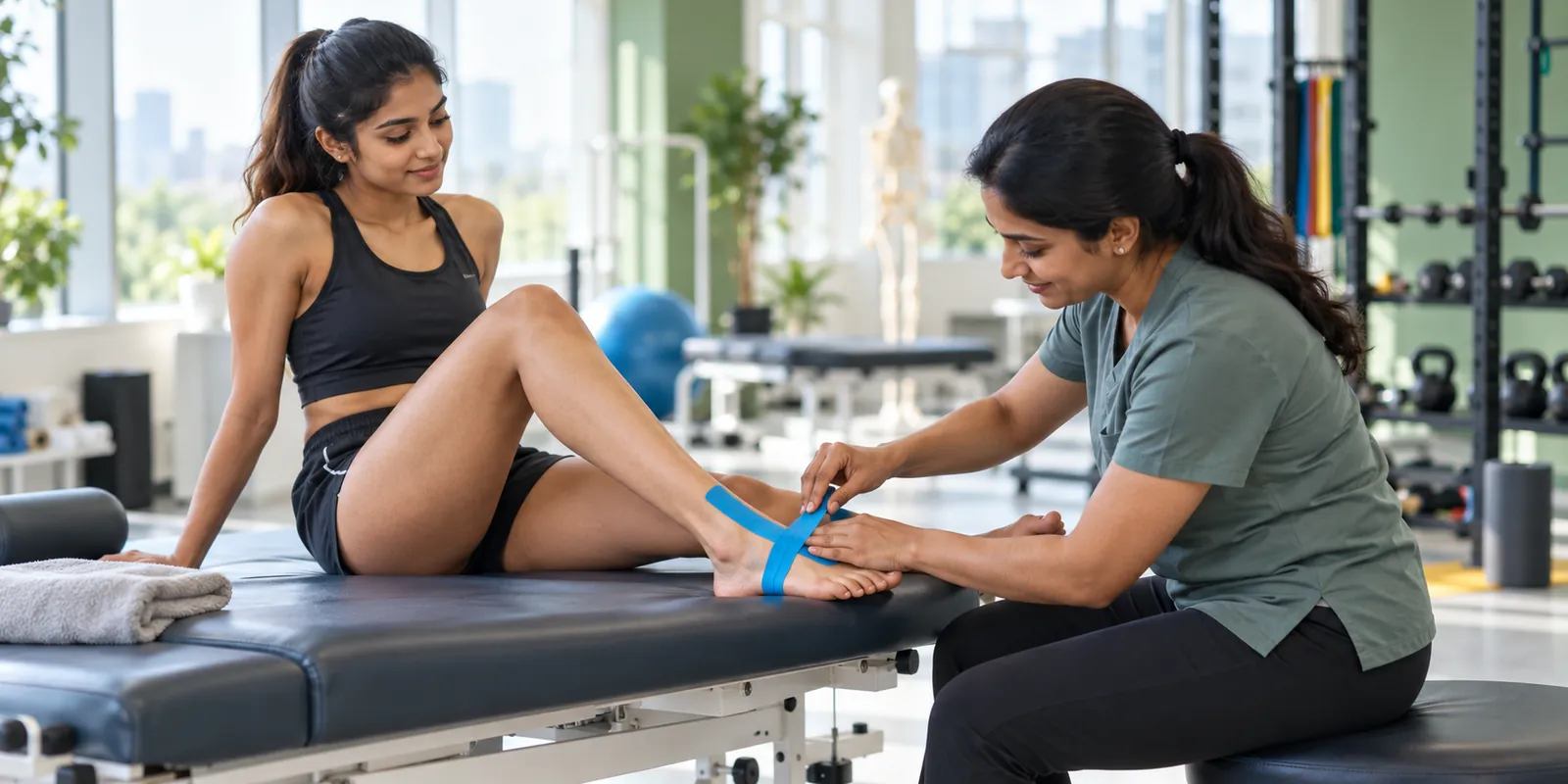
Ankle braces, knee braces and taping can protect an injured joint while it heals and during return to sport.
Medicines and injections
Short courses of pain relief help in the early stage. Some tendon problems may be treated with injections in selected cases, after discussion with the doctor.
Keyhole surgery
When a ligament is torn and the joint stays unstable, when a meniscus tear locks the knee, or when a shoulder keeps dislocating, arthroscopic (keyhole) surgery may be needed. See arthroscopy and ACL surgery and shoulder treatment.
Returning to sport safely
Going back too early is the most common reason injuries return. Before you return to full sport, you should have:
- Full, pain-free movement of the injured joint
- Strength close to the uninjured side
- Good balance and control
- Confidence with running, turning and jumping at match speed
Your doctor and physiotherapist will test these and give you a stepwise plan back to training and matches.
Preventing sports injuries
- Warm up for 10 to 15 minutes before playing, and cool down after.
- Build strength in the hips, core and legs, not just the muscles you see in the mirror.
- Increase training gradually; avoid sudden jumps in distance or load.
- Wear the right shoes for your sport and the surface.
- Learn safe landing and cutting techniques, especially in football, basketball and kabaddi.
- Rest when you are injured or very tired.
Typical recovery times
| Injury | Typical time before full sport (varies) |
|---|---|
| Mild ankle sprain | 1 to 3 weeks |
| Moderate to severe ankle sprain | 4 to 8 weeks or more |
| Mild hamstring or calf strain | 2 to 4 weeks |
| Tennis elbow | Often several weeks to a few months |
| Meniscus trimming by keyhole surgery | Often 4 to 8 weeks |
| ACL reconstruction | Around 9 months or more |
These are common ranges, not promises. Return depends on strength, control and confidence, tested by your doctor and physiotherapist.
For parents and coaches
Young athletes are still growing, and some injuries, such as growth plate injuries and overuse problems in the knee and heel, are specific to them. Get it checked if a young player limps, has pain that keeps them out of training for more than a few days, has swelling, or has pain that wakes them at night. Encourage rest days, more than one sport across the year, and proper warm-ups. For broken bones in children, see children’s fracture care.
Gym injuries
Lifting too heavy, poor technique and skipping warm-ups cause many shoulder, back and knee injuries in gyms. If an exercise causes sharp pain, stop it. Lower the weight, check your form and build up gradually. Pain that lasts more than a week or two, or pain with swelling or weakness, should be examined.
Related care
Broken bones from sports are covered under fracture and trauma care.
Why Cheema Medical Complex
- Orthopaedic surgeon with sports medicine training: Dr. Gaurav Jain, MBBS, MS (Orthopaedics), FISM (Spain).
- Physiotherapy and rehab in the same hospital.
- X-ray, CT scan and a 24/7 emergency for fresh injuries.
- Keyhole surgery when a ligament, meniscus or shoulder needs repair.
- On Mohali Stadium Road, Phase 4, close to Chandigarh, Zirakpur and Kharar.
Book a sports injury consultation
Call 8054922340 or book an appointment online. Bring any X-ray or MRI you have.