



Arthroscopy and sports injury surgery in Mohali
Arthroscopy is keyhole surgery for joints. Through two or three small cuts, the surgeon passes a thin camera into the joint, sees the inside on a screen and treats the problem with fine instruments. It is the standard way to treat many knee and shoulder injuries, including ACL tears, meniscus tears and repeated shoulder dislocations.
At Cheema Medical Complex (CMC Hospital), on Mohali Stadium Road in Phase 4, the orthopaedic department treats sports and activity injuries for young athletes, weekend players, gym-goers and people hurt at work or on the road. Physiotherapy is in the same hospital, so rehabilitation can start soon after surgery. Patients come to us from Mohali, Chandigarh, Zirakpur, Kharar and across the Tricity.
Common injuries treated with arthroscopy
ACL tear (anterior cruciate ligament)
The ACL is one of the main ligaments that keeps the knee stable when you twist or change direction. It is often torn while landing from a jump, stopping suddenly or turning on a planted foot, which happens a lot in football, cricket, kabaddi, basketball and badminton. Many people feel a pop, the knee swells within hours, and later it feels wobbly or gives way.
Meniscus tear
The menisci are two C-shaped cushions of cartilage between the thigh bone and shin bone. They can tear with a twisting injury in younger people, or with everyday squatting and wear in older adults. Symptoms include pain on the inner or outer side of the knee, swelling, and catching or locking.
Other knee problems
- Loose fragments of bone or cartilage inside the knee
- Cartilage damage after an injury
- Kneecap instability and repeated kneecap dislocation
- Other ligament injuries, such as the PCL
Shoulder problems
- Recurrent shoulder dislocation, where the labrum (the rim of the socket) has torn
- Rotator cuff tears, which cause pain and weakness lifting the arm
- Impingement and some causes of a stiff, painful shoulder
How we diagnose the problem
At your first visit the orthopaedic surgeon will ask exactly how the injury happened, examine the joint for swelling, tenderness, movement and stability, and compare it with the other side. X-rays check the bones. An MRI scan is usually needed to see ligaments, menisci and cartilage clearly, and it guides whether surgery is needed and what kind.
The orthopaedic OPD at Cheema Medical Complex runs Monday to Saturday, 10:30 am to 5:00 pm. Call 8054922340 to book, and bring any MRI or X-ray you already have.
Treatment without surgery
Not every injury needs an operation. Depending on your injury, your age and what you want to get back to, the first treatment may be:
- Rest, ice, compression and keeping the leg raised in the first days
- Pain and anti-inflammatory medicines
- A knee brace or shoulder sling for a short time
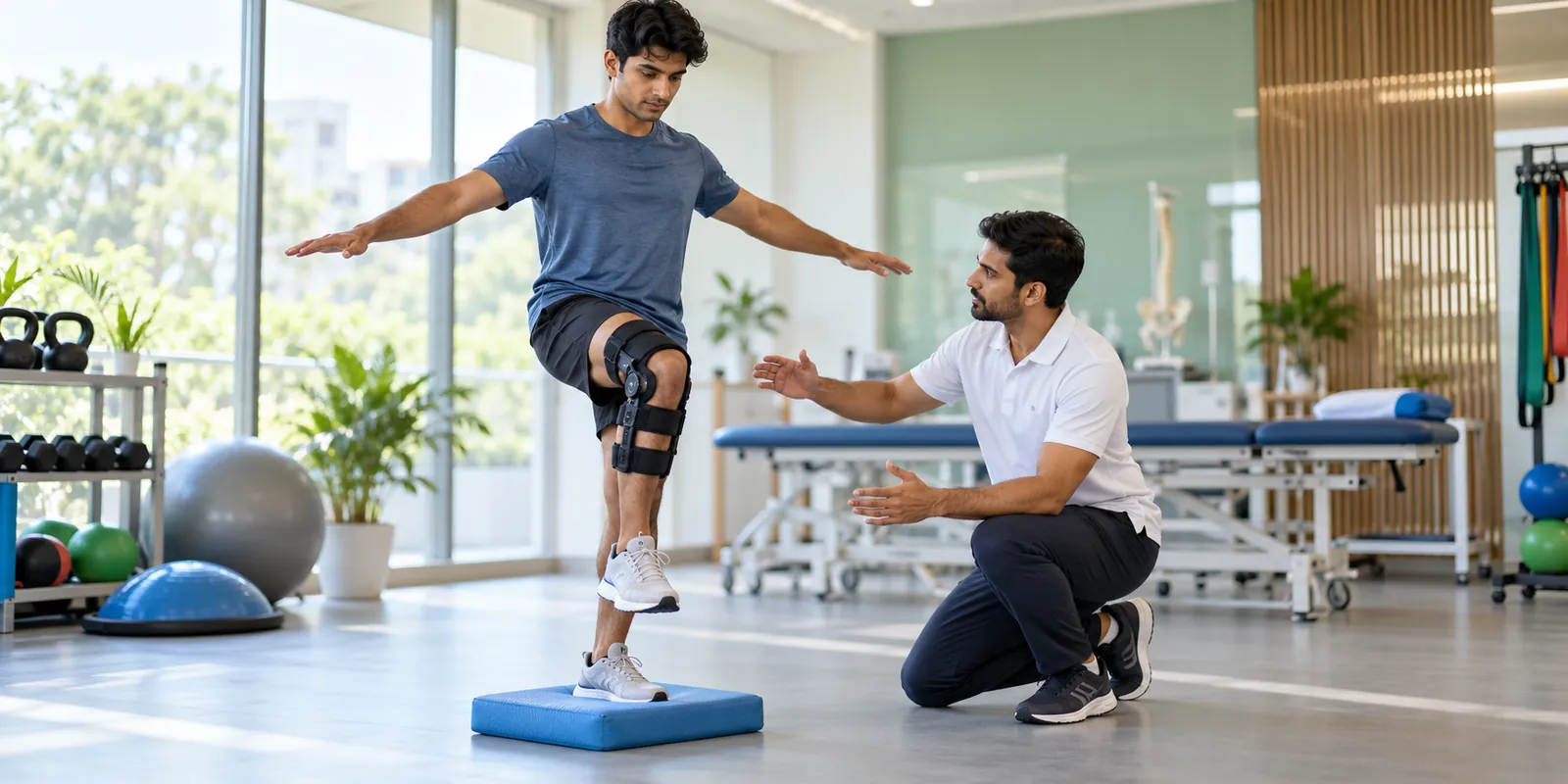
- A structured physiotherapy programme to rebuild strength and balance
People who do not play twisting sports and whose knee does not give way can often live well with an ACL tear after physiotherapy. Small, stable meniscus tears can settle too.
When arthroscopic surgery is advised
Surgery is usually recommended when:
- The knee keeps giving way, or you want to return to pivoting sports
- A torn meniscus is locking or catching the knee
- The shoulder has dislocated more than once
- Pain and loss of function continue despite good physiotherapy
- The MRI shows a repairable tear, especially in a young patient
ACL reconstruction
A torn ACL does not heal back together on its own, so it is reconstructed with a graft. The graft is commonly taken from your own hamstring tendons or another tendon around the knee. Through keyhole cuts, the surgeon removes the torn ligament stumps, drills small tunnels in the thigh and shin bones, passes the new graft through them and fixes it in place. Over the following months your body turns the graft into a new ligament.
If the meniscus is also torn, it is usually repaired or trimmed in the same operation.
Meniscus repair and partial meniscectomy
When possible, the torn meniscus is repaired with fine stitches, because keeping the meniscus protects the knee from arthritis later. Tears that cannot heal are trimmed (partial meniscectomy), leaving as much healthy meniscus as possible. Recovery after trimming is quick. After a repair, you may need crutches and a brace for some weeks to let it heal.
Shoulder arthroscopy
For repeated dislocations, the torn labrum is stitched back to the rim of the socket with small anchors, and the loose capsule is tightened. Rotator cuff tears can often be repaired arthroscopically too. After shoulder surgery you will wear a sling for a few weeks, then start guided exercises.
Graft choices, implants and fixation devices vary by case. Ask during your consultation what the surgeon recommends for your injury and why.
Recovery and rehabilitation
The operation is only half of the treatment. Rehabilitation decides how well you get back to your sport.
| Stage | ACL reconstruction (typical) |
|---|---|
| First days | Walking with crutches or a walker, getting the knee straight, ice and swelling control |
| 2 to 6 weeks | Bending past a right angle, walking without crutches, starting exercise bike work |
| 6 weeks to 3 months | Strength and balance work, normal walking and stairs |
| 3 to 6 months | Running in a straight line, more advanced strength work |
| 9 months onwards | Return to sport for many patients, after strength and hop tests |
These are common timelines, not deadlines. Returning to sport too early is one of the main reasons ACL grafts fail again, so the decision is based on strength, control and confidence, not only on time.
Recovery after a simple meniscus trim or a diagnostic arthroscopy is much faster. Many people are back at desk work within a week or two.
Risks
Arthroscopy is generally a low-risk procedure, but your surgeon will explain possible problems, including infection, blood clots, stiffness, ongoing pain, and graft stretching or re-tear after ACL reconstruction. Following the rehab plan and returning to sport only when you are ready lowers the risk of re-injury.
Related care
Older patients with knee pain from worn cartilage rather than a tear may be better helped by other treatments, including knee replacement surgery when arthritis is advanced. If an injury has caused a broken bone, see fracture and trauma care.
Why Cheema Medical Complex
- Orthopaedic surgeon with sports-injury training: Dr. Gaurav Jain, MBBS, MS (Orthopaedics), FISM (Spain).
- Physiotherapy in the same hospital, so rehab starts early and follows one plan.
- 24/7 emergency for fresh injuries.
- On Mohali Stadium Road, Phase 4, a short drive from Chandigarh, Zirakpur and Kharar.
- A hospital families in Mohali have trusted since 1988.
Book a sports injury consultation
Call 8054922340 or book an appointment online. Bring your MRI or X-ray if you have one. We will tell you honestly whether you need surgery, physiotherapy, or just time.