



When a Fever Turns Into Typhoid
At first, Ananya thought she had picked up a mild stomach bug. She had a fever, headaches, body aches, and no appetite, but she assumed it would pass in a day or two. Like many people, she tried to push through it, drinking a little water, resting when she could, and telling herself it was probably something she had eaten.
By the third day, it was clear this was not getting better.
The fever kept climbing. She felt weak, nauseated, and increasingly dehydrated. Even simple tasks became difficult. What worried her most was how quickly her body seemed to be slowing down. When she finally came to see us, the story she described immediately made us think about typhoid fever, especially because she had recently been exposed to food and water that may not have been safe.
The symptoms that raised concern
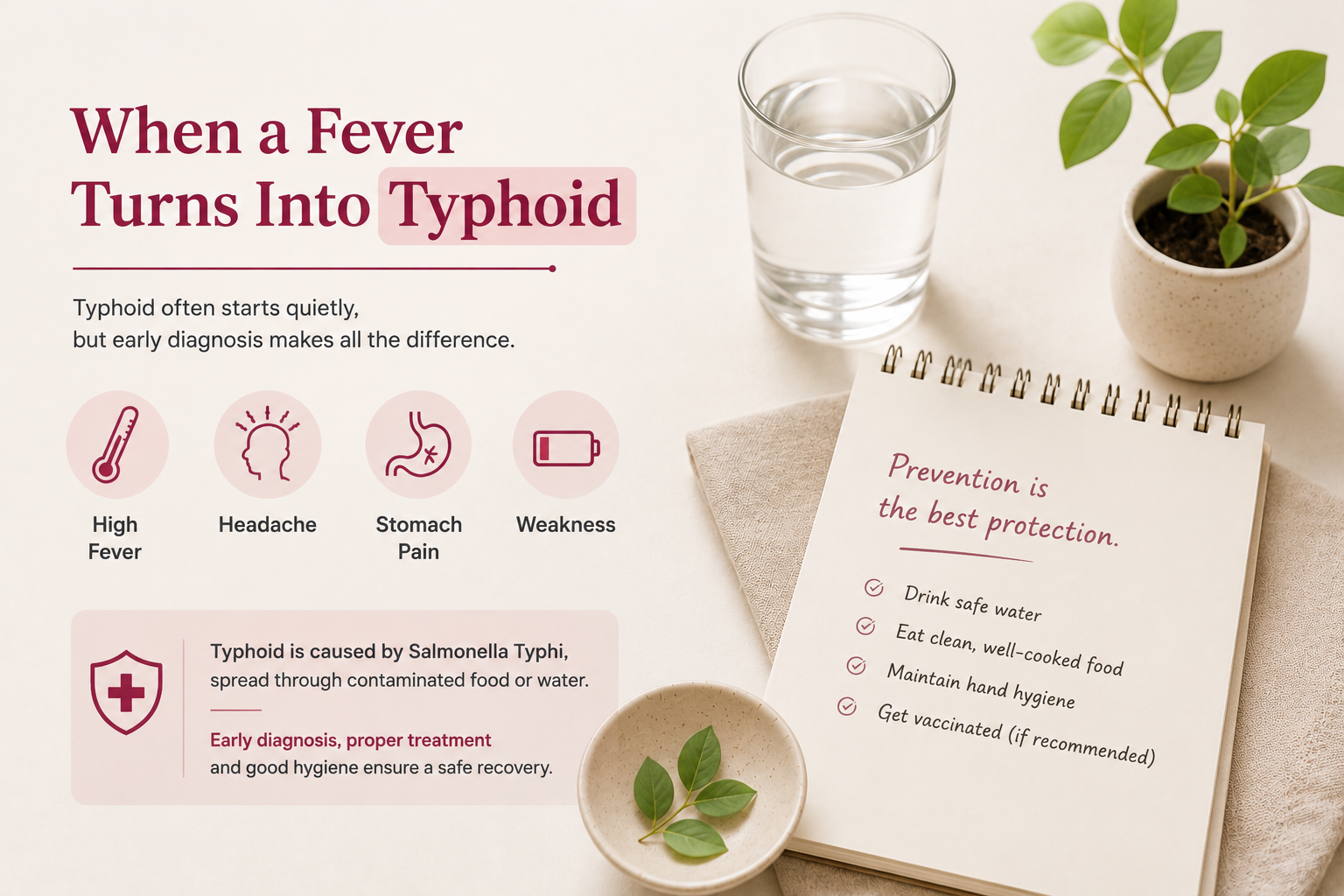
Typhoid often begins like many other infections, which is one reason it can be missed early. Fever is the most common symptom, but patients may also have headache, stomach pain, poor appetite, weakness, diarrhea or constipation, and sometimes a rash.
That was part of Ananya’s experience. She felt unwell in a way that was hard to ignore but still easy to misread at first. She assumed it might be malaria or food poisoning, which is exactly what many people think before the diagnosis becomes clear.
What we explained
We told her that typhoid is a bacterial infection caused by Salmonella Typhi and is usually spread through contaminated food or water. In many cases, the infection develops after drinking unsafe water, eating contaminated food, or traveling in areas where sanitation is limited.
Hearing that made the illness feel more real to her. It was no longer just “a fever” it had a name, a cause, and a treatment plan.
How the diagnosis was made
Because typhoid can look like several other illnesses in the beginning, testing is important. Doctors usually confirm it with lab tests such as blood, stool, or urine cultures, along with a careful review of symptoms and exposure history.
For Ananya, the test results confirmed what we suspected. That moment brought both relief and concern: relief because we finally knew what was wrong, and concern because untreated typhoid can become much more serious if ignored.
Why treatment mattered so much
Once the diagnosis was confirmed, we started antibiotics and supportive care. We also focused on fluids, rest, and monitoring because typhoid can leave patients severely weak and dehydrated.
Ananya’s recovery did not happen overnight. In fact, that was one of the hardest parts for her. She had hoped she would feel better quickly, but she needed time, treatment, and close follow-up before her strength returned.
The part patients often forget
Typhoid does not only affect the person who is sick in the moment. It can also spread if proper hygiene is not followed, and some people may continue carrying the bacteria even after they feel better. That is why completing antibiotics and following medical advice is essential.
We also talked to Ananya about prevention for the future: safe drinking water, careful food choices, hand hygiene, and vaccination where appropriate. Those steps matter because typhoid is preventable, even though it can be dangerous when it does occur.
A recovery that felt like gratitude
By the end of her treatment, Ananya said the hardest part had been not knowing what was happening to her body. Once she understood it was typhoid, the fear changed into action. She followed the treatment plan, recovered gradually, and left with a better understanding of how to protect herself going forward.
That is the story I want patients to remember: typhoid often starts quietly, but it should never be brushed off. With early diagnosis and proper treatment, most people recover well.