


Stroke: A Neurologist’s Perspective on Early Recognition, Treatment, and Recovery
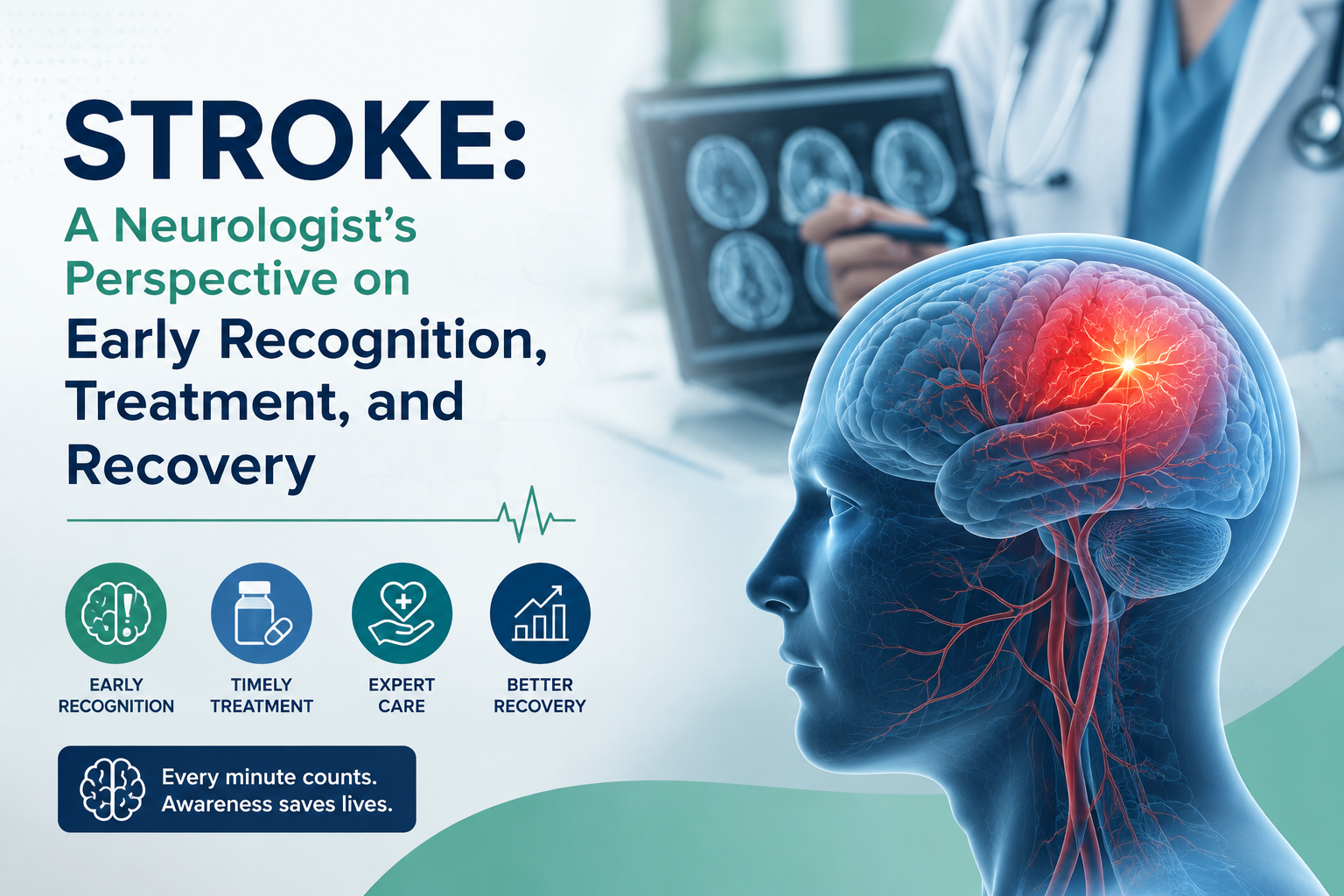
Stroke is a medical emergency that can change a person’s life within minutes. As a neurologist, I see stroke as a condition where every second matters, because timely treatment can protect brain function, reduce disability, and save lives.
Stroke occurs when the blood supply to part of the brain is interrupted or when a blood vessel in the brain bursts. Without oxygen and nutrients, brain cells begin to die quickly. That is why early recognition and immediate hospital care are so important.
What Is a Stroke?
A stroke happens when blood flow to the brain is blocked or reduced, or when a blood vessel in the brain ruptures. This leads to damage in the brain area affected, which may result in weakness, speech difficulty, vision problems, imbalance, or altered consciousness.
There are three main types of stroke:
• Ischemic stroke, caused by a clot blocking blood flow to the brain.
• Hemorrhagic stroke, caused by bleeding in or around the brain.
• Transient ischemic attack, often called a mini-stroke, where symptoms are temporary but still need urgent attention.
Ischemic stroke is the most common type. Hemorrhagic stroke, although less common, is often more severe and requires immediate specialist care.
Common Warning Signs of Stroke
Recognizing stroke symptoms early can make a major difference. The most widely used warning signs include:
• Sudden weakness or numbness in the face, arm, or leg, especially on one side of the body.
• Sudden difficulty speaking or understanding speech.
• Sudden loss of vision in one or both eyes.
• Sudden dizziness, loss of balance, or trouble walking.
• Sudden severe headache with no known cause.
A simple way to remember stroke symptoms is BEFAST:
Acronymn
B. sudden imbalance/vertigo/dizziness
E. Sudden impaired in vision/sight
F. Face drooping
A. Any Arm/Leg weakness or numbness
S. Difficulty in speaking / understanding
T. Time to call emergency services
If these symptoms appear, do not wait for them to improve. Immediate evaluation in a hospital with stroke care facilities is essential.
Why Stroke Happens
Stroke is often linked to underlying health conditions and lifestyle factors. Common risk factors include:
• High blood pressure.
• Diabetes.
• High cholesterol.
• Smoking.
• Obesity.
• Heart rhythm disorders such as atrial fibrillation.
• Lack of physical activity.
• Excess alcohol intake.
• Previous history of stroke or TIA.
Some risk factors cannot be changed, such as age and family history. However, many major causes can be controlled with proper medical care and lifestyle changes.
How Neurologists Diagnose Stroke
In the hospital, the first goal is to determine whether the stroke is ischemic or hemorrhagic, because treatment differs. A neurologist usually evaluates the patient urgently and reviews the symptoms, timing, medical history, and risk factors.
Common tests include:
• CT scan of the brain.
• MRI brain, when needed.
• Blood tests.
• ECG and heart monitoring.
• Blood pressure and oxygen assessment.
• Imaging of blood vessels in some cases.
Speed is critical because some treatments are only possible within a limited time window after symptom onset.
Stroke Treatment
Stroke treatment depends on the type and timing of presentation. For ischemic stroke, certain patients may benefit from clot-busting medicine if they arrive early enough. Some patients may also need a procedure to remove the clot from a large brain artery.
For hemorrhagic stroke, treatment focuses on controlling bleeding, reducing pressure in the brain, and addressing the cause of the bleed. This may require intensive monitoring and sometimes surgery.
In both types, supportive care is very important. This may include:
• Monitoring vital signs.
• Controlling blood pressure.
• Managing blood sugar.
• Preventing complications.
• Early rehabilitation.
The earlier treatment begins, the better the chance of recovery.
Recovery After Stroke
Recovery after stroke varies from person to person. Some patients improve quickly, while others need long-term rehabilitation. The brain has some ability to adapt and recover, especially when therapy starts early.
Rehabilitation may include:
• Physiotherapy.
• Speech therapy.
• Occupational therapy.
• Cognitive rehabilitation.
• Support for emotional and psychological changes.
Stroke recovery is not just about surviving the event. It is about helping the patient regain function, independence, and quality of life.
Can Stroke Be Prevented?
Many strokes can be prevented by controlling risk factors and maintaining a healthy lifestyle. Prevention strategies include:
• Keeping blood pressure under control.
• Managing diabetes and cholesterol.
• Quitting smoking.
• Staying physically active.
• Eating a balanced diet.
• Taking prescribed medications regularly.
• Treating heart conditions properly.
Regular checkups are especially important for people with high risk factors or a previous history of TIA or stroke.
When to Visit a Neurologist
You should seek urgent medical attention if you or a loved one develops sudden weakness, speech trouble, facial drooping, vision loss, or severe dizziness. Even if the symptoms improve, they still need specialist evaluation because they may represent a warning stroke.
A neurologist plays a central role in diagnosing the cause, starting treatment, and planning long-term prevention. Early expert care can reduce the impact of stroke and improve outcomes.
Conclusion
Stroke is a serious but treatable neurological emergency. With early recognition, rapid hospital care, and ongoing prevention, many patients can recover well and reduce the risk of future strokes.
For hospitals, creating awareness about stroke symptoms and urgent response can save lives. The message is simple: act fast, reach the hospital immediately, and consult a neurologist without delay.