



PCOS: A Gynaecologist’s Perspective
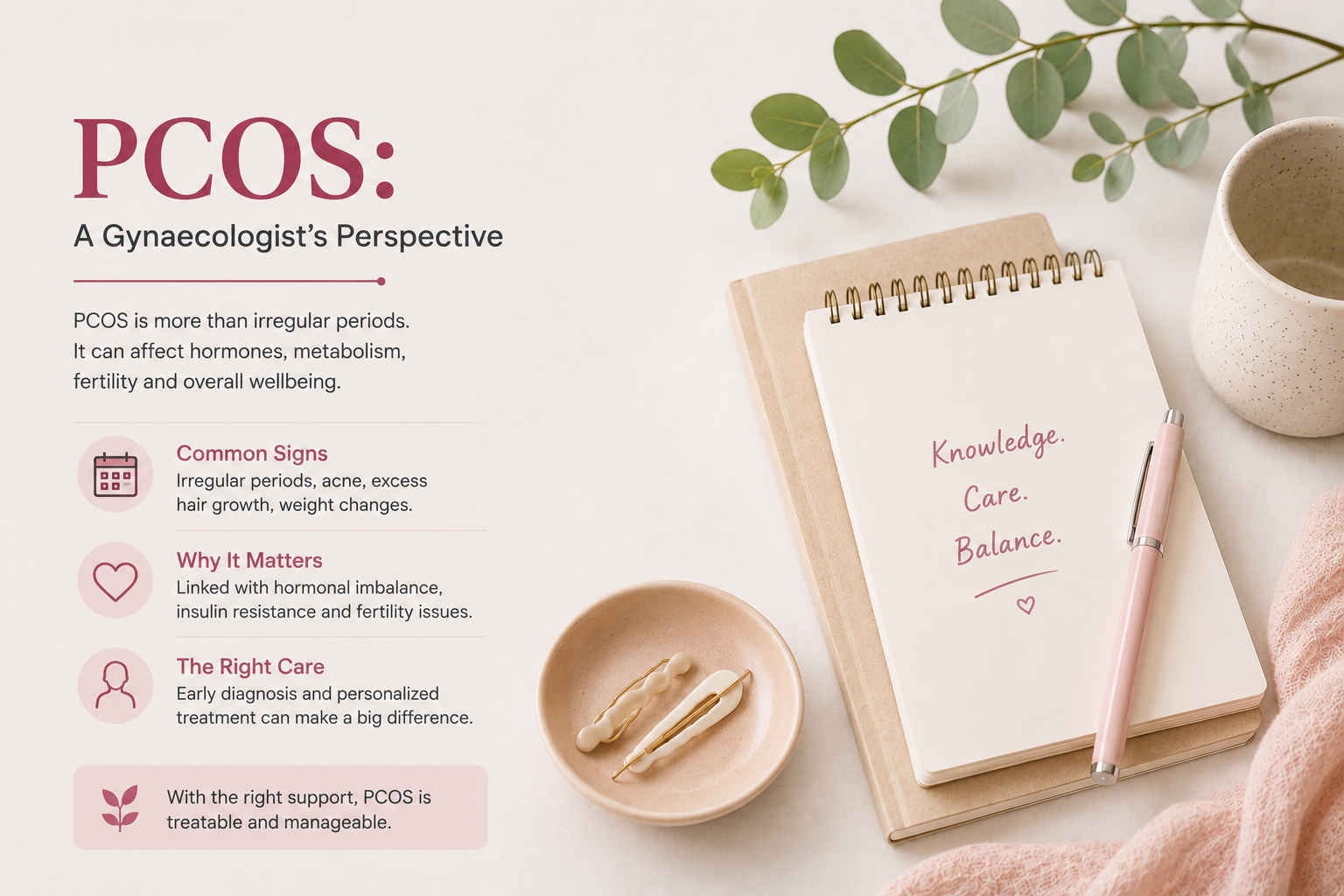
PCOS is one of the most common hormone-related conditions I see in gynaecology, but it does not look the same in every patient. For some women, it starts with missed periods. For others, it is acne, unwanted hair growth, weight changes, or difficulty conceiving that brings them to the clinic.
When Patients First Notice Something Is Wrong
Many women with PCOS spend months or years feeling that their symptoms are “just part of being female” before they seek help. They may notice that periods are irregular, very infrequent, or completely absent, or they may become frustrated by skin changes or hair growth that do not improve with routine treatment.pubmed.
As a gynaecologist, I often remind patients that these symptoms are not trivial. They can be clues that the ovaries and hormones are not working in the usual pattern, and it is worth investigating rather than dismissing them.
How I Think About the Diagnosis
PCOS is diagnosed by looking at the whole picture, not just one test. In practice, I consider menstrual irregularity, signs of excess androgen such as acne or hirsutism, and ovarian findings on ultrasound, while also ruling out other possible causes.pmc.ncbi.nlm.nih+2
That matters because patients with PCOS may be told different things depending on which specialist they see. In gynaecology, we pay close attention to cycle pattern, fertility concerns, and the reproductive impact of chronic anovulation.
Why It Affects More Than Periods
PCOS is not only about the ovaries. It can also be linked with insulin resistance, weight gain, dyslipidemia, glucose problems, and a higher risk of long-term metabolic concerns. That is why I do not treat PCOS as a single-symptom condition — I look at both reproductive health and overall wellbeing.
It is also important to recognize the emotional side. Many patients feel dismissed, frustrated, or worried about fertility and body changes. A good consultation should give them both answers and a plan.pubmed.
What Treatment Usually Focuses On
Treatment depends on the symptom that matters most to the patient. If pregnancy is not the immediate goal, we may focus on regulating cycles and managing acne or excess hair growth. If fertility is the priority, the plan shifts toward restoring ovulation and supporting conception.pubmed.
Lifestyle changes remain a foundation of care, especially when weight or metabolic concerns are part of the picture. Depending on the case, treatment may also include hormonal therapy, ovulation-inducing medication, or medication for insulin resistance.pubmed.
Why Follow-Up Matters
PCOS is a long-term condition, so care should not stop after the first diagnosis. Follow-up helps us monitor periods, metabolic risk, fertility goals, and how well treatment is working over time.
I also screen for associated concerns that patients may not connect to PCOS right away, including mood symptoms, sleep problems, and metabolic health issues. The goal is not just symptom control, but long-term protection.
A Gynaecologist’s Message
If your cycles are irregular, if you are noticing acne or excess hair growth, or if you have concerns about fertility, it is worth seeing a gynaecologist. PCOS is common, treatable, and manageable with the right approach.