




Asthma: A Pulmonologist’s Perspective
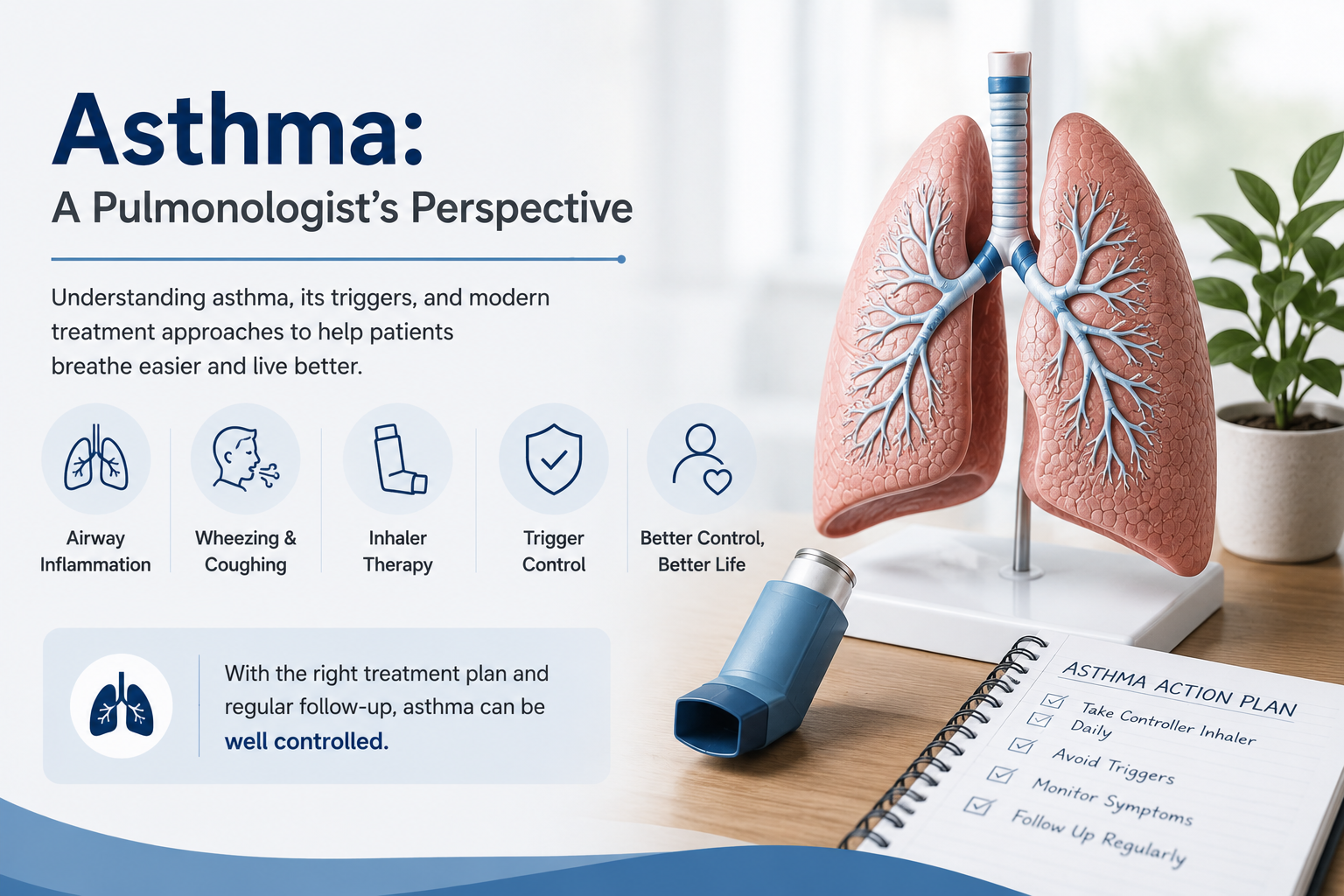
Asthma is a chronic condition that affects the airways, making it harder to breathe when they become inflamed and narrow. From a pulmonologist’s point of view, the main goal is to control symptoms, prevent attacks, and help patients live normally with the right long-term treatment plan.
What asthma feels like
Patients often describe wheezing, coughing, chest tightness, or shortness of breath that comes and goes. These symptoms may be worse at night/early morning, during exercise, with pollens, cat/dog fresh air or after exposure to smoke, dust, cold air, or infections.
What I look for first
When I evaluate asthma, I want to know how often symptoms happen, what triggers them, and whether the patient has ever needed urgent care for a flare-up. I also check inhaler technique, because many patients are not getting the full benefit of treatment simply because the inhaler is not being used correctly.
Why treatment matters early
Asthma is not just about treating symptoms when they appear. Current guidance emphasizes inhaled corticosteroid-containing inhalational treatment for all patients with asthma, because this helps reduce inflammation and lowers the risk of severe exacerbations.
What treatment may include
Treatment usually combines a controller inhaler, a reliever inhaler, and trigger control. Some patients do well with as-needed low-dose ICS-formoterol, while others need daily maintenance therapy depending on how often symptoms occur and how severe they are.
How we reduce flare-ups
As a pulmonologist, I also focus on the small things that make a big difference: avoiding triggers, managing allergies, treating rhinitis, and making sure the patient has a written action plan. These steps help reduce emergency visits and keep asthma more stable over time.
When to seek specialist care
You should see a pulmonologist if your symptoms are frequent, if you are waking at night, if you are using your reliever inhaler often, or if your asthma is interfering with daily life. Anyone with repeated flare-ups or poor control needs a closer look at treatment and triggers.
A pulmonologist’s message
Asthma can be managed well when it is treated as an ongoing condition rather than an occasional problem. With the right inhaler plan, good education, and follow-up, most patients can breathe easier and stay in control of their symptoms.

Dr. Kanwaljit Singh
Chief Consultant – Pulmonary, Critical Care, Allergy & Sleep Medicine
Book Appointment