




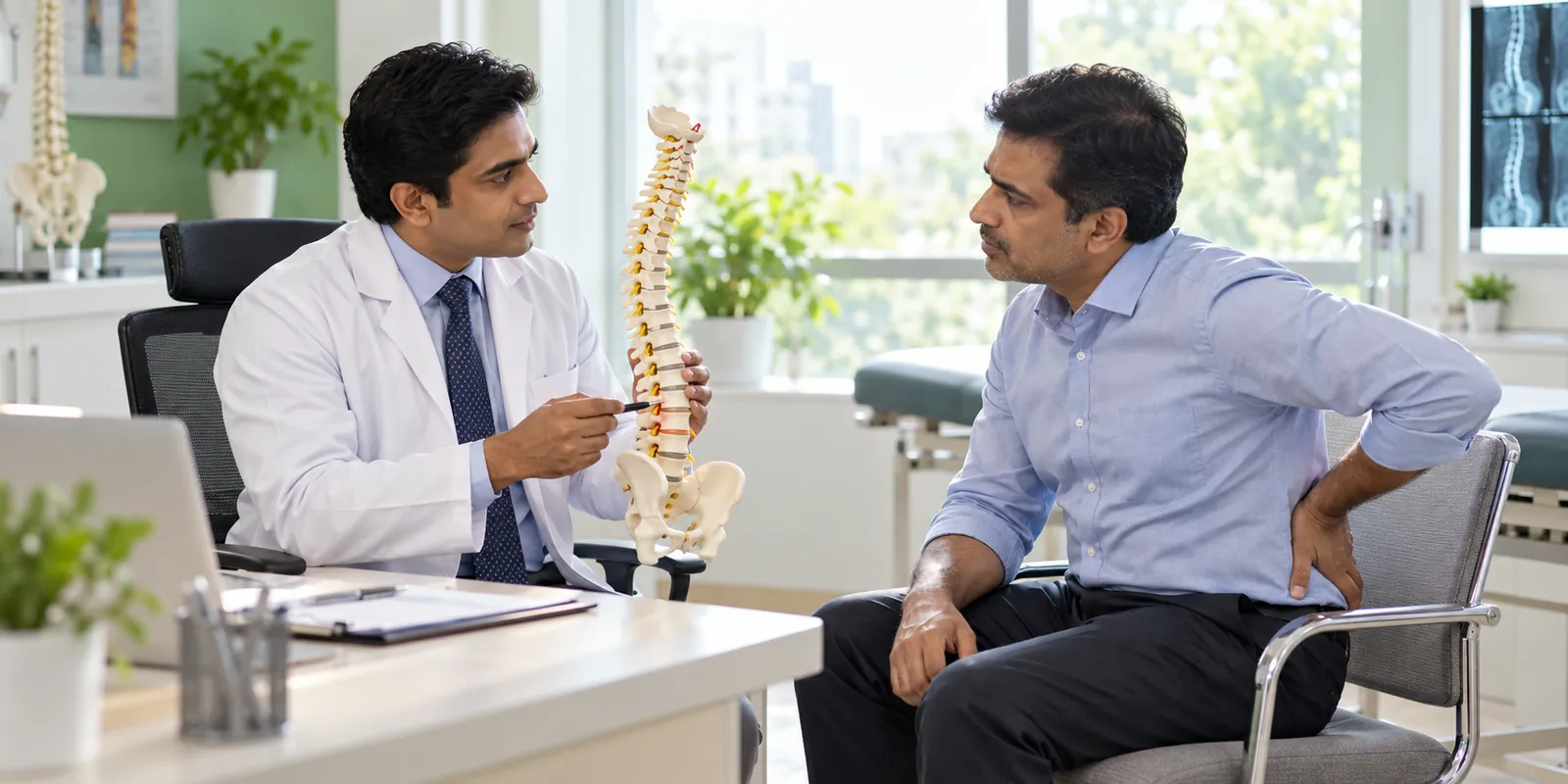
Back pain and spine care at Cheema Medical Complex, Mohali
Back pain is one of the most common reasons people see a doctor. Long hours at a desk, driving, lifting at work or at home, weak core muscles, poor sleep posture and age-related wear all play a part. Most back pain settles on its own or with simple treatment. But pain that keeps coming back, pain that shoots down the leg, or pain with numbness or weakness needs a proper diagnosis.
At Cheema Medical Complex (CMC Hospital), on Mohali Stadium Road in Phase 4, the orthopaedic team assesses back and neck problems, with X-ray, CT scan and in-house physiotherapy in the same hospital. A neurosurgery department is in the same building too, for the spine problems that need it. We see patients from Mohali, Chandigarh, Zirakpur, Kharar and across the Tricity.
Common back and neck problems we treat
- Mechanical low back pain: strain of the muscles, ligaments and joints of the lower back, often after lifting or a long day sitting
- Slip disc (disc prolapse) and sciatica: pain running from the back or buttock down the leg, sometimes with tingling or numbness
- Neck pain and cervical spondylosis: stiffness and pain in the neck, sometimes spreading to the shoulders and arms
- Lumbar canal stenosis: narrowing of the spinal canal in older adults, causing leg pain or heaviness on walking that eases on sitting or bending forward
- Spondylolisthesis: one vertebra slipping forward on another
- Spine fractures after falls or accidents, and fragility fractures from osteoporosis
- Postural back and neck pain in office workers and students
Warning signs: come to the emergency
Back pain is rarely dangerous, but some symptoms need urgent care. Come to the emergency, open 24 hours, if back pain comes with:
- New or worsening weakness in a leg or both legs
- Numbness around the groin, inner thighs or buttocks
- Difficulty passing urine, or loss of bladder or bowel control
- Fever and feeling unwell
- A fall, accident or injury
- Unexplained weight loss, or a history of cancer
How we find the cause
At the orthopaedic OPD (Monday to Saturday, 10:30 am to 5:00 pm), the doctor will ask where the pain is, how it started, what makes it better or worse, and whether it spreads into the arms or legs. The examination checks your posture, how the spine moves, and the nerves to your legs or arms: power, sensation and reflexes.
Many patients do not need any scan at first. When needed:
- X-rays show alignment, wear and fractures.
- MRI shows discs, nerves and the spinal canal, and is used when nerve symptoms persist or treatment is being planned.
- CT scan shows bone detail, for example after an injury.
- Blood tests help when infection or inflammatory arthritis is suspected.
Treatment without surgery
Most back and neck pain gets better without an operation. Treatment usually includes:
- Staying active. Gentle walking and normal activity, within the limits of pain, help more than bed rest.
- Medicines for pain and muscle spasm for a short period, as advised.
- Physiotherapy. A programme of stretching, core strengthening, posture work and gradual return to activity. This is the main treatment for most patients, and it lowers the chance of the pain coming back.
- Advice for work and home: desk and screen height, lifting technique, sleeping position, and breaks from sitting.
- Weight management and regular exercise.
For some patients with nerve pain that does not settle, an injection near the affected nerve or joint may be considered.
When spine surgery is considered
Surgery is advised for a small number of patients, usually when:
- Leg or arm pain from a trapped nerve stays severe despite several weeks of good treatment
- Weakness is getting worse
- There is loss of bladder or bowel control (an emergency)
- The spine is unstable after an injury, or a fracture is pressing on the nerves
- Canal narrowing badly limits walking
Common operations include discectomy (removing the part of a slipped disc that presses on the nerve), decompression (making more room for the nerves) and, for unstable spines, fixation and fusion. The right operation depends on your scans and symptoms, and the surgeon will explain the options, risks and expected recovery before any decision.
Spine operations vary a lot in type and cost. Ask during your consultation who will perform the surgery, which approach is recommended, and why.
Neck pain
Neck pain is often linked to posture, especially long hours on phones and laptops. Most of it eases with physiotherapy, posture changes and short courses of medicine. Pain, tingling or weakness spreading into the arm can mean a nerve is pinched in the neck and needs a proper examination. Neck pain after an accident, or with weakness, should be seen urgently.
Preventing back pain from coming back
- Keep moving: walk daily and avoid sitting for hours without a break.
- Strengthen your core and hips with the exercises your physiotherapist teaches you.
- Lift with your legs, keep the load close to your body, and avoid twisting while lifting.
- Set your screen at eye level and your chair to support your lower back.
- Keep a healthy weight, stop smoking, and sleep on a supportive mattress.
Common spine problems and their usual first treatment
| Problem | Typical symptoms | Usual first treatment |
|---|---|---|
| Muscle strain of the lower back | Ache and stiffness after lifting or a long day sitting | Staying active, short course of medicines, physiotherapy |
| Slip disc with sciatica | Pain from the buttock down the leg, tingling | Medicines, physiotherapy, activity changes; MRI if it persists |
| Cervical spondylosis | Neck stiffness, pain spreading to the shoulder | Posture work, physiotherapy, medicines |
| Lumbar canal stenosis | Leg heaviness on walking that eases on sitting | Physiotherapy, medicines; surgery if walking stays badly limited |
| Fragility fracture of the spine | Sudden back pain in an older person, often after a minor fall | X-ray, pain control, bracing in some cases, osteoporosis treatment |
Back pain at work and while driving
Many of the patients we see from Mohali and Chandigarh spend long hours at a desk or behind the wheel. Small changes help:
- Stand up and walk for a couple of minutes every 30 to 45 minutes.
- Keep the top of your screen at eye level and your feet flat on the floor.
- Use a small cushion or rolled towel behind your lower back in the car.
- On long drives, stop every hour or so and stretch.
- Carry bags close to your body, and switch sides.
What physiotherapy for back pain involves
Your physiotherapist will start with pain relief and gentle movement, then move to exercises that strengthen the deep core and hip muscles, improve flexibility and correct posture. You will get a home programme to do every day. Most people notice a difference within a few weeks, and keeping up the exercises is the best way to stop the pain coming back.
Related care
Back pain in older adults sometimes goes with hip or knee arthritis; see arthritis and joint pain treatment. Neck pain spreading to the shoulder may be a shoulder problem; see shoulder treatment. Spine injuries after accidents are covered under fracture and trauma care.
Why Cheema Medical Complex
- Orthopaedic assessment by Dr. Gaurav Jain, MBBS, MS (Orthopaedics), FISM (Spain), whose work includes spine disorders.
- X-ray, CT scan, lab and physiotherapy in the same hospital, with a neurosurgery department in the building.
- 24/7 emergency for spine injuries and urgent nerve symptoms.
- On Mohali Stadium Road, Phase 4, a short drive from Chandigarh, Zirakpur and Kharar.
- Trusted by families in Mohali since 1988.
Book a back pain consultation
Call 8054922340 or book an appointment online. Bring any X-ray or MRI you already have.